
Why Now?
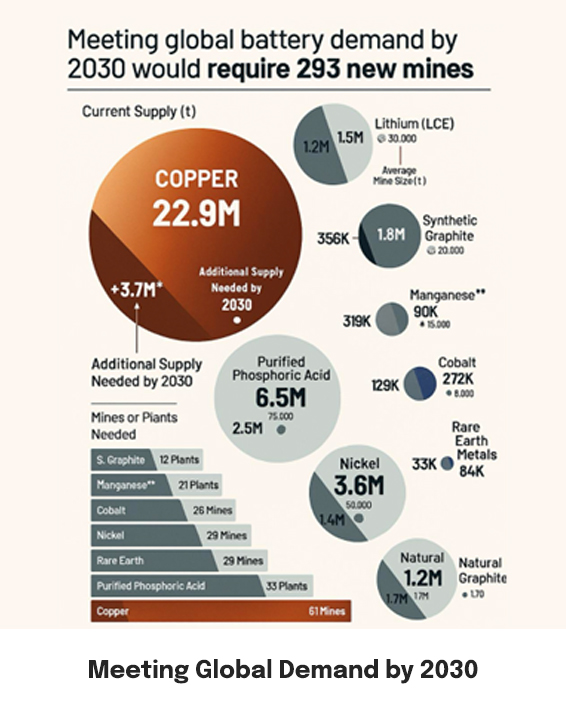
- Copper demand over the next 50 years is expected to exceed all historical production; land-based supply alone may be insufficient
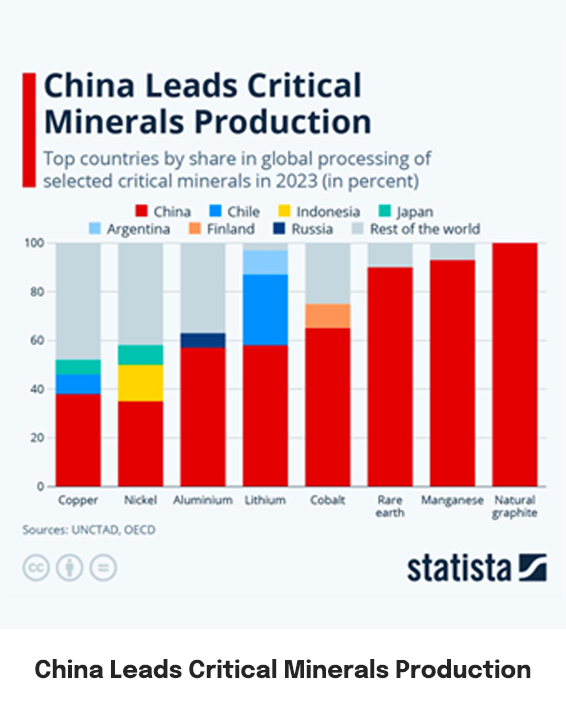
- China controls 50–90% of key critical mineral processing, creating significant supply chain and geopolitical risk
- Global critical minerals demand projected to increase approximately 3x by 2030 and 4x by 2040
- Nickel demand expected to nearly double by 2040, driven by the global energy transition
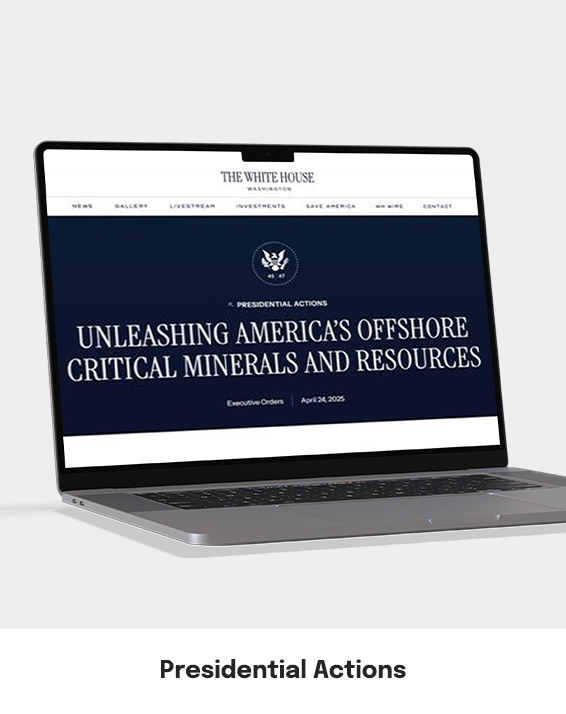
- On April 24, 2025, the White House signed an Executive Order prioritizing the rapid development of subsea critical mineral resources
- Deep-sea mining is becoming increasingly viable due to technological advancements from the military and offshore oil & gas sectors
- Environmental impacts have been extensively studied by American academic institutions, the International Seabed Authority (“ISA”), NOAA, and through over half a billion dollars of investment from TMC alone
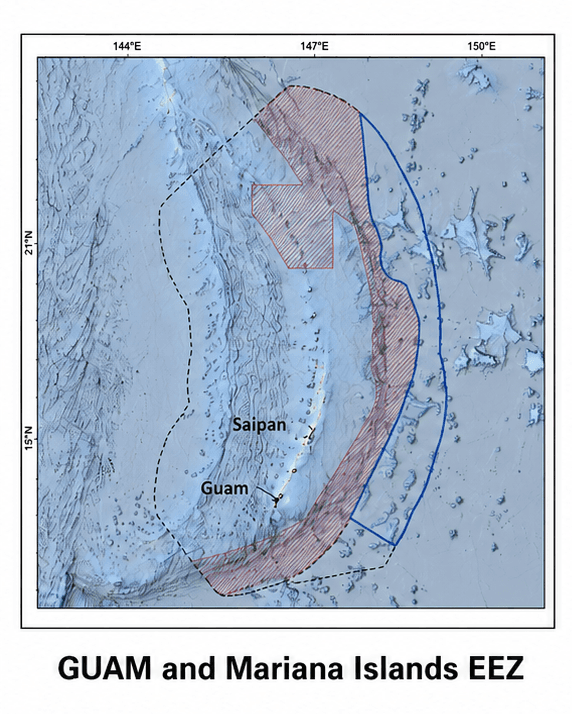
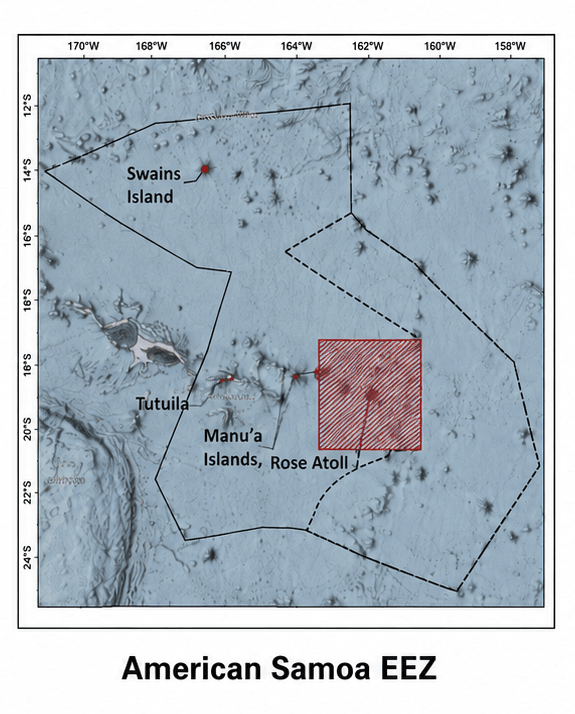
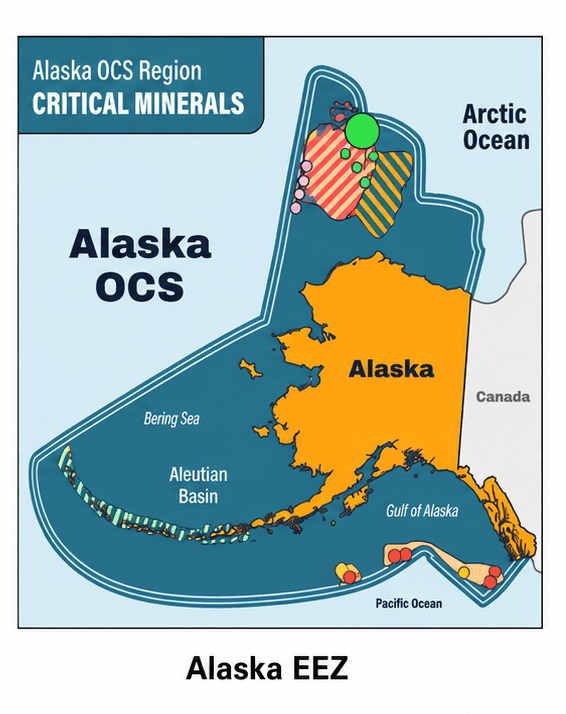
- The U.S. may begin leasing areas within Exclusive Economic Zones (“EEZs”) for mineral exploration
- Copper demand over the next 50 years is expected to exceed all historical production; land-based supply alone may be insufficient
- China controls 50–90% of key critical mineral processing, creating significant supply chain and geopolitical risk
- Global critical minerals demand projected to increase approximately 3x by 2030 and 4x by 2040
- Nickel demand expected to nearly double by 2040, driven by the global energy transition
- On April 24, 2025, the White House signed an Executive Order prioritizing the rapid development of subsea critical mineral resources
- Deep-sea mining is becoming increasingly viable due to technological advancements from the military and offshore oil & gas sectors
- Environmental impacts have been extensively studied by American academic institutions, the International Seabed Authority (“ISA”), NOAA, and through over half a billion dollars of investment from TMC alone
- The U.S. may begin leasing areas within Exclusive Economic Zones (“EEZs”) for mineral exploration
- Copper demand over the next 50 years is expected to exceed all historical production; land-based supply alone may be insufficient
- China controls 50–90% of key critical mineral processing, creating significant supply chain and geopolitical risk
- Global critical minerals demand projected to increase approximately 3x by 2030 and 4x by 2040
- Nickel demand expected to nearly double by 2040, driven by the global energy transition
- On April 24, 2025, the White House signed an Executive Order prioritizing the rapid development of subsea critical mineral resources
- Deep-sea mining is becoming increasingly viable due to technological advancements from the military and offshore oil & gas sectors
- Environmental impacts have been extensively studied by American academic institutions, the International Seabed Authority (“ISA”), NOAA, and through over half a billion dollars of investment from TMC alone
- The U.S. may begin leasing areas within Exclusive Economic Zones (“EEZs”) for mineral exploration
- Copper demand over the next 50 years is expected to exceed all historical production; land-based supply alone may be insufficient
- China controls 50–90% of key critical mineral processing, creating significant supply chain and geopolitical risk
- Global critical minerals demand projected to increase approximately 3x by 2030 and 4x by 2040
- Nickel demand expected to nearly double by 2040, driven by the global energy transition
- On April 24, 2025, the White House signed an Executive Order prioritizing the rapid development of subsea critical mineral resources
- Deep-sea mining is becoming increasingly viable due to technological advancements from the military and offshore oil & gas sectors
- Environmental impacts have been extensively studied by American academic institutions, the International Seabed Authority (“ISA”), NOAA, and through over half a billion dollars of investment from TMC alone
- The U.S. may begin leasing areas within Exclusive Economic Zones (“EEZs”) for mineral exploration
- Copper demand over the next 50 years is expected to exceed all historical production; land-based supply alone may be insufficient
- China controls 50–90% of key critical mineral processing, creating significant supply chain and geopolitical risk
- Global critical minerals demand projected to increase approximately 3x by 2030 and 4x by 2040
- Nickel demand expected to nearly double by 2040, driven by the global energy transition
- On April 24, 2025, the White House signed an Executive Order prioritizing the rapid development of subsea critical mineral resources
- Deep-sea mining is becoming increasingly viable due to technological advancements from the military and offshore oil & gas sectors
- Environmental impacts have been extensively studied by American academic institutions, the International Seabed Authority (“ISA”), NOAA, and through over half a billion dollars of investment from TMC alone
- The U.S. may begin leasing areas within Exclusive Economic Zones (“EEZs”) for mineral exploration
- Copper demand over the next 50 years is expected to exceed all historical production; land-based supply alone may be insufficient
- China controls 50–90% of key critical mineral processing, creating significant supply chain and geopolitical risk
- Global critical minerals demand projected to increase approximately 3x by 2030 and 4x by 2040
- Nickel demand expected to nearly double by 2040, driven by the global energy transition
- On April 24, 2025, the White House signed an Executive Order prioritizing the rapid development of subsea critical mineral resources
- Deep-sea mining is becoming increasingly viable due to technological advancements from the military and offshore oil & gas sectors
- Environmental impacts have been extensively studied by American academic institutions, the International Seabed Authority (“ISA”), NOAA, and through over half a billion dollars of investment from TMC alone
- The U.S. may begin leasing areas within Exclusive Economic Zones (“EEZs”) for mineral exploration
-Arthur D. Little Co – Seabed Mining: A $20 Trillion Opportunity (2024)
Nodule fields of the Cook Islands
Exploration
& Projects.
Our work spans mineral exploration, advanced mapping, and high-profile search missions.
Each project reflects our commitment to precision technology and real-world execution.